Texte, couleurs et fonds
Par Valentin Brosseau / @c4software
Au programme
- La typographie
- Les couleurs
- Les fonds
- L'héritage (le « C » de CSS)
Formater du texte
La taille : font-size
- Absolue :
16px(précis mais rigide) - Relative :
1.2em(s'adapte au contexte) 👍
La notation em
1.3em = « 30 % plus grand que le parent »
⚠️ Le séparateur est un point : 1.3em
La police : font-family
body {
  font-family: Verdana, Arial, sans-serif;
}
Pourquoi une liste ?
La police doit exister chez le visiteur
On donne donc des polices de secours, de la préférée à la plus générique.
(Et Google Fonts pour aller plus loin)
Gras, italique, décorations
| Propriété | Valeurs |
|---|---|
font-weight |
normal, bold, 100 à 900 |
font-style |
normal, italic |
text-decoration |
underline, line-through, none |
strong ou font-weight: bold ?
Quelle différence ?
Le sens vs l'apparence
<strong>: « ce mot est important » (HTML)font-weight: bold: « ce texte est épais » (CSS)
L'alignement : text-align
left, center, right, justify
⚠️ Uniquement sur les balises « block »
Le float
Habiller une image de texte

img {
  float: left;
}
Et clear: both pour arrêter l'habillage.
Les couleurs
3 notations
En anglais
red,blue,teal…
Rapidement limité. Seulement 140 couleurs
En hexadécimal

La notation universelle du design.
En RGB
color: rgb(246, 243, 242);Identique à l'hexadécimal, en décimal.
Comment choisir sa couleur ?
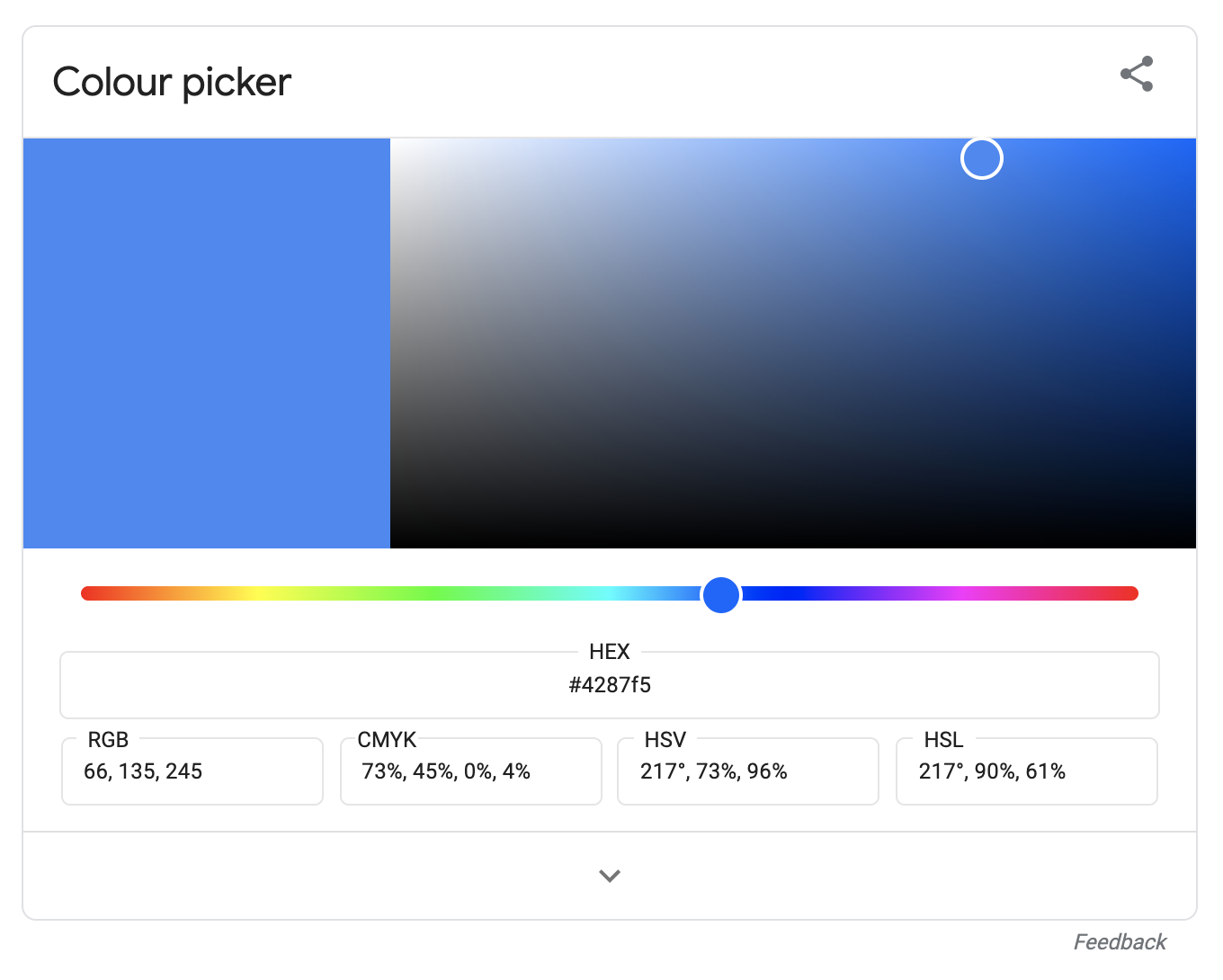
Un « Color Picker » (IDE, en ligne, Google)
body {
  background: black;
  color: white;
}
Que va-t-il s'afficher ?
Tout le texte est blanc !
Même les p, sans aucune règle sur p…
🤔
L'héritage
Les enfants héritent des propriétés de leurs parents.
C'est le « C » de CSS : Cascading.
La stratégie gagnante
- Le style général sur
body. - On affine seulement ce qui doit changer.
body { color: #333; }
h1 { color: #1d2d3a; } /* Plus précis : gagne */
Les fonds
Pas seulement des couleurs
body {
  background-image: url("../img/motif.png");
}
C'est moche hein ?
Vous pouvez compléter avec :
| Propriété | Valeurs |
|---|---|
| background-repeat | no-repeat, repeat-x, repeat-y, repeat |
| background-attachment | fixed, scroll |
| background-position | en pixel, ou top, bottom, left, right, center |
body {
  background-image: url("logo.png");
  background-attachment: fixed;
  background-repeat: no-repeat;
  background-position: center;
}
La version « combinée »
background: url("logo.png") fixed no-repeat center;⚠️ Le piège du chemin
Dans un fichier CSS, url(…) est relatif…
au fichier CSS, pas au HTML !
La transparence
img {
  opacity: 0.6; /* 60 % opaque */
}
S'applique à l'élément entier (enfants compris).
Récapitulatif
- Typographie :
em, polices avec secours. - Couleurs : l'hexadécimal partout.
- Fonds :
background, chemin relatif à la CSS. - Héritage : le général sur
body, on affine ensuite.
Des questions ?
Place au TP 🚀
Texte, couleurs et fonds Par Valentin Brosseau / @c4software